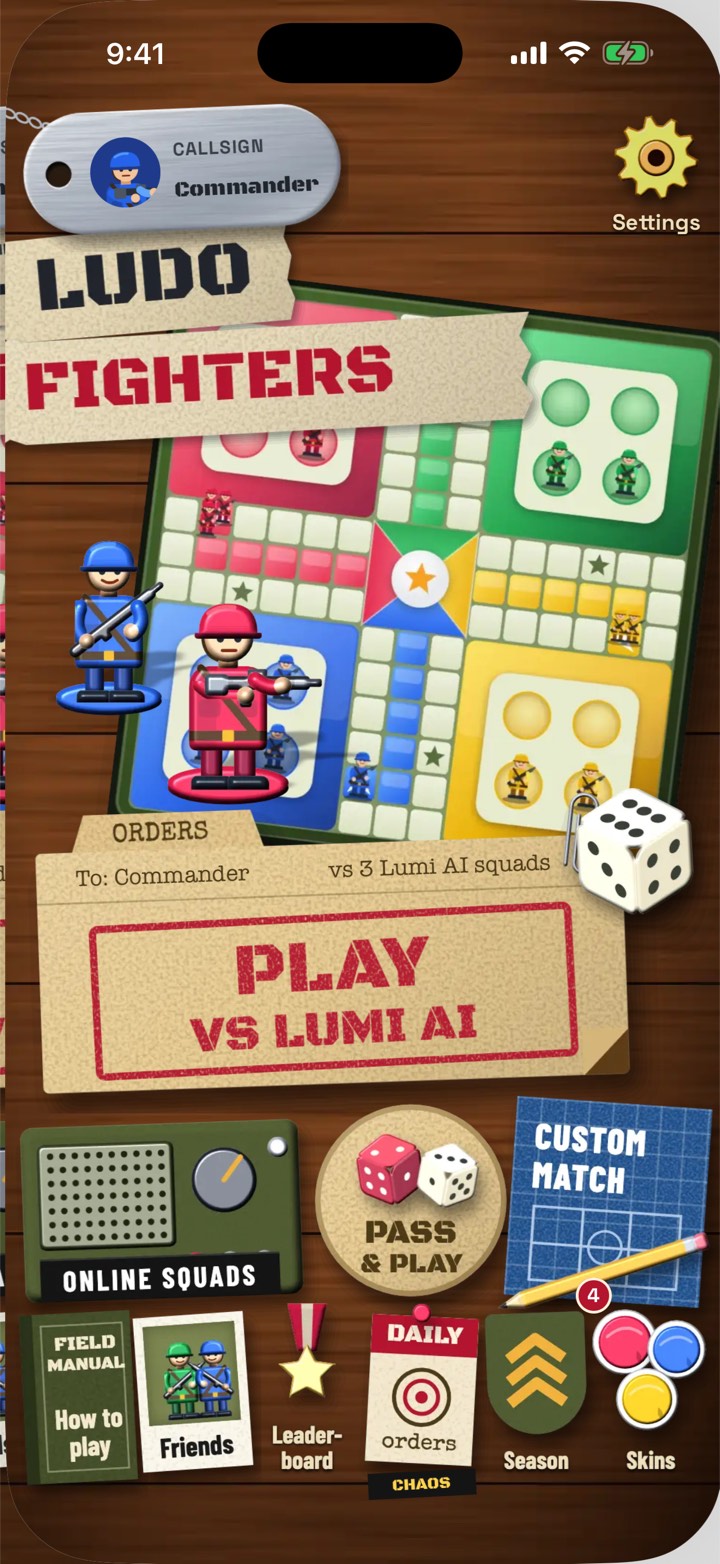
A white-label game is a finished, working game that a studio licenses to you so you can publish it under your own brand. Players see your name, your logo, your colours and your app icon. The rules, the online side and the tested gameplay come from the original game, so you skip the long, risky part of making something fun from nothing.
The idea is borrowed from retail, where a factory makes a product and a shop sells it under its own label. In games, it works best when the genre is already loved, the rules are clear and your real advantage is your audience, not a new mechanic.
Below is how white-label games work in practice: what changes, what stays the same, who owns what, and where the model fits and where it does not.
How a white-label game works
The process is simpler than most people expect:
- You pick a game that suits your audience, such as a Ludo game for families, an online cricket game for sports fans, or a set of puzzles for an app's users.
- You agree the terms: branding, territories, platforms, hosting and fees, in writing.
- The studio re-skins it: new name, logo, colours, icon, and characters or boards where you want them.
- It gets translated into your players' languages, including menus, help screens and voice where needed.
- It is tested on real phones, then published on the App Store, Google Play, the web or inside your own app.
- Updates keep coming: fixes from the main game reach your version after launch.
If you want the bigger picture on licence types first, start with what game licensing is.
What changes and what stays the same
This is the most useful line to draw before you start.
| Usually changes | Usually stays the same |
|---|---|
| Game name and app icon | Core rules and turn flow |
| Logo, colours and fonts | Game balance and difficulty curve |
| Characters, boards, stadiums | Online rooms and matchmaking |
| Menus, help and store text | How the server decides results |
| Language and voice | Lumi AI opponents and their logic |
| Store listings and screenshots | Admin dashboard and live settings |
The left column is your brand. The right column is the proven engine underneath. You can push some items across the line, for example a new game mode or a special event, but each one adds design and testing work. Our article on reskinning a game breaks this down screen by screen.
Who owns what
Ownership confuses people, so it helps to be explicit:
- The studio owns the game itself: the code, the original art and the design.
- You own your brand: your name, logo, characters you supply and your marketing.
- New art made for you is covered by the agreement. Some deals give you exclusive use of it, others do not. Ask.
- Player data should be agreed in writing, including who holds it and how privacy rules are met.
- Store accounts can be yours or the studio's. If the game is on your account, you control the listing and the reviews.
None of this is unusual. It just needs to be on paper before launch, not after.
Who uses white-label games
White-label games suit anyone with players already waiting:
- Telecoms and media brands that want a game their customers return to.
- Leagues and clubs that want fans playing in their colours, with their crests.
- Apps and platforms that want a games corner without building a studio.
- Publishers bringing a proven game to a new market, covered on our publishers page.
- Schools and training providers that want a learning game under their own name.
What they have in common is distribution. They already reach people. A white-label game gives those people something worth opening.
The honest pros and cons
Pros
- Much faster to launch than a custom build, because the game already exists.
- Lower risk: the gameplay has already been played and tuned.
- Online servers, an admin dashboard and Lumi AI opponents come included, which are expensive to build from scratch.
- Updates from the main game keep improving your version.
Cons
- You start from someone else's design, so truly new ideas are limited.
- Another brand may run a version of the same game, unless you agree exclusivity.
- Deep rule changes can cost almost as much as building fresh.
- You depend on the studio for core fixes, so choose one that ships updates reliably.
If the cons outweigh the pros for your plan, read license a game or build a custom one before deciding.
What to look for in a white-label partner
Not every white-label offer is equal. Before you sign, check:
- Is the game live? A game already in the stores, with real players, has had its rough edges found.
- Does the studio own it outright? If they do not own the art and code, they cannot license it cleanly.
- Who decides online results? Results should be decided on the server, not on the player's phone. That keeps play fair and stops cheating.
- How are updates delivered? Ask how fixes reach your version and whether you can turn features on or off.
- Is there an admin dashboard? You will want to see players, handle reports and change live settings without a developer.
- How is children's privacy handled? If kids might play, this is not optional.
White-label games at LacNova
Every LacNova game is ours, art and code, which is why we can offer each one white-label. Ludo Fighters brings Ludo with capture fights, 2 to 6 squads and three ways to play. NPL Cricket League brings online T20 cricket with private lobbies and server-decided balls. Game Collection brings 106 games across 13 categories that can be bundled into your app. We can host the servers or hand them over, and fixes from the main game keep reaching your version.
If one of these fits your audience, see the white-label options on our licensing page or browse all our games first.
Frequently asked questions
What is the difference between white-label and reskinning?
White-label describes the business model: a licensed game published under your brand. Reskinning is the production work inside that model, replacing the art, name and text so the game looks like yours.
Can players tell a white-label game came from another studio?
Not from the game itself. Players see your name, logo, colours and icon. Credits and legal pages follow whatever the agreement says.
Can I get exclusive rights to a white-label game?
Often yes, usually limited to a territory, platform or category. Exclusivity is a term in the agreement and normally affects the fee.
Is a white-label game still free to play?
That is your choice within the agreement. Many brands launch free to play, with any paid extras kept optional.