
The platform underneath every tool
Each tool solves its own problem. These are the parts Lacnova gives all of them, so you only ever learn them once.
One identity
Sign in once, reach everything you are entitled to.
Per-tool plans
Pay per tool. Cancel one without disturbing the rest.
Auditable usage
Every action recorded, so logs and invoices agree.
Expiring sessions
Short-lived tokens, rotated refresh, theft detected.
One API
Same auth, envelope and error codes, whichever tool.
Protective limits
Validation and rate limits so scripts fail loudly.
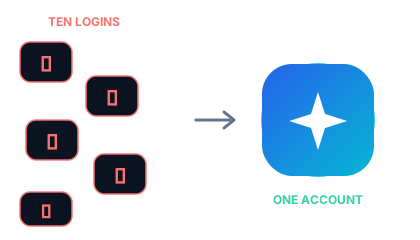
One account instead of ten
Access belongs to the person, not the tool. Adding someone gives them what they need; removing them removes it everywhere, in one action.
- One password, one place to revoke it.
- Entitlements checked per tool, per request.
- Admins can reproduce a customer session without a shared login.
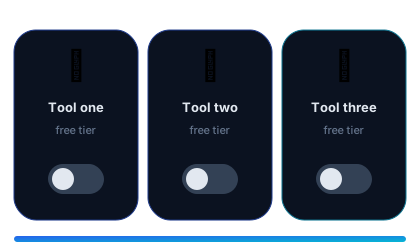
Plans per tool, not per platform
The usual model charges for the whole suite because one team uses one part of it. Here, subscriptions are independent — the invoice matches what you actually use.
- A free tier on every tool, usable rather than a countdown.
- Cancel from the dashboard, without a retention call.
- Price changes come with at least 30 days notice.

A shelf that keeps filling
New tools appear in your dashboard the moment they are published. No upgrade, no migration, no second account.
Independent by design
Each tool is self-contained, so one can be added or retired without touching the others.
You shape the order
What we build next comes from what people ask for most.

See what is actually being used
Not vanity charts. Runs per tool over time — enough to decide what is worth keeping and what quietly stopped being useful.
- Daily totals per tool, so a spike has an obvious owner.
- Per-person attribution for cost and for audits.
- Exportable, because it is your record of your work.

Every action leaves a timestamp
Which tool, which action, when, by whom. It answers the auditor, settles the argument, and explains the invoice.
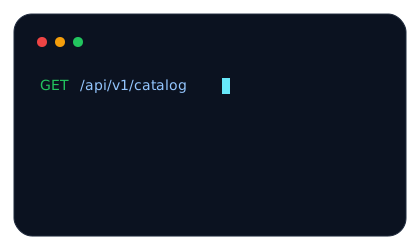
Predictable by design
One base URL, one auth header, one response envelope, one set of error codes — across every tool.
- Envelope
- Every response is { success, data } or { success, error, code }.
- Codes
- Branch on a stable machine code; the human message is free to change.
- Auth
- Bearer access token plus a refresh endpoint. Nothing bespoke per tool.
- Versioned
- Paths start at /api/v1, so nothing breaks under you.
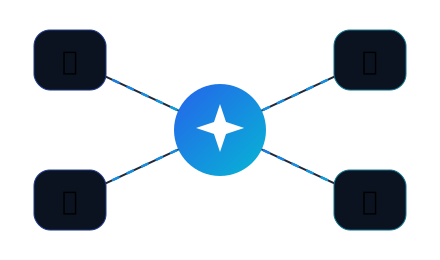
Fits the stack you already have
Nothing here asks you to move your data somewhere else, adopt a new way of working, or install an agent on anything.
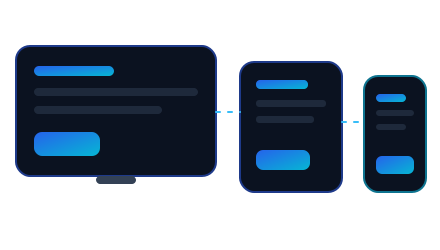
Desktop, tablet, phone
The dashboard is responsive rather than a desktop app with a mobile apology, and tools that need a device have real native apps.

Boring where it counts
Passwords hashed with bcrypt and never logged. Refresh tokens stored only as hashes and rotated on every use — reusing an old one is treated as theft and signs out every session.
Your data leaves with you
Export what you put in, whenever you want, in a format you can actually use. Closing the account deletes it — no retention hostage-taking.
- Export is a button, not a support ticket.
- Account data deleted within 30 days of closure.
- We do not sell personal data. It is not part of the model.
Running, and watched
Graceful shutdowns so a deploy never cuts a request mid-write, and monitoring that tells us before it tells you.
See it on a real job
Open the catalogue, pick the tool closest to your problem, and run it on something that actually matters.